Page 84
P. 84
82 Explore | Flavours
In Jakarta, Martabak AA in Setiabudi is among wedang ronde, which, despite initially being Effendy, a second-generation Chinese-
the best places to sample a bite of martabak made using a Chinese recipe, still stands as Indonesian who manages the restaurant,
telur, while Martabak 65A in Pecenongan is one of the highlights of Dutch acculturation. whispered the secret to Restoran Trio’s
believed to be the best place to sample the Originally called tangyuan, the dish – balls of success: “To become a restaurant owner,
different varieties of sweet martabak. glutinous rice flour served with warm soup you need to understand the art of cooking.
– is typically served as part of the Dongzhi You cannot rely solely on the chef,” he said.
Another dish that has evolved to become Festival. The Dutch, however, found the
a staple in Indonesian Chinese restaurants is name difficult to pronounce and later Another popular Chinese Peranakan
fuyunghai, which is believed to be a Chinese decided to call it rondje after its shape restaurant is Cahaya Kota on Jalan Wahid
adaptation of the European omelette. (rond is Dutch for ‘round’). Hasymin, Central Jakarta, which opened in
Originally made with a mix of eggs, crab 1943. The restaurant is home to about 100
meat, onions and a few other ingredients, Indonesians then took the original recipe Cantonese dishes, ranging from Shanghai
today fuyunghai, which means ‘crab that sounds of ronde and added their own touch to the prawn spring rolls, fried chicken, duck
like hai’, no longer relies on crab meat as its dish, taking things up a notch by filling what with hoisin sauce, and Cantonese snapper,
main ingredient. Instead it is now served with were originally just balls of dough with nuts, to salted frog with Chinese mustard.
a variety of fillings, such as chicken or mixed brown sugar or kacang hitam. In their hands,
vegetables. Restoran Trio in Central Jakarta the soup, too, saw improvements, as they Meanwhile, Kedai Kopi Tak Kie, perched
is a must to seek out this delicious dish. began concocting their own version with in Gang Gloria, a small alley in the Glodok
a blend of sugar and ginger, creating the area of West Jakarta, stands as a testament
Aside from cooking unforgettable main course wedang ronde we are familiar with today. to Chinese settlers’ expertise in concocting
dishes, the Chinese are also known for their Ronde Mania Ibu Suhartini in Alun-Alun delicious beverages. First opened in 1927, this
innovative desserts. While the Dutch served Kidul is a favourite in Yogyakarta, while simple café serves just two types of drinks:
toetje (desserts), the Chinese created their for those travelling to Malang, Ronde black coffee and milk coffee, both of which
own version, something known today as es Titoni is a highly recommended pit stop. are served with ice in a tall glass. The Chinese
puter, an ice-cream-like dessert made from may be better known for their tea culture,
coconut milk and sugar. Its production Today, Chinese food is ubiquitous but it is precisely this sort of simplicity that
technique is relatively simple, made by across Indonesia. From street hawkers to has attracted coffee lovers to this small
spinning the ice container upon salted ice. the many restaurants that dot its vibrant corner of the city. “It’s all about taste,” says
What was initially just sweet cream produced cities, these establishments often come A Yauw, the grandson of Tak Kie’s founder,
from a mixture of coconut milk and sugar, with extensive menus and a handful who manages the place today.
es puter is now served at various Indonesian of stories (or, rather, myths). Restoran
festivities and celebrations with a variety of Trio in Jakarta is one of them; opening A Yauw says he prefers coffee beans from
flavours. It can also be found by the roadside, two years after Indonesia claimed its Lampung and Sidikalang for his beverages,
sold by street hawkers. independence, it serves approximately which are made using a family recipe that
300 different Chinese Peranakan dishes has been passed down from generation to
Gastronomic influence flows in every on its menu. Its Nanking chicken generation. For a cup of iced coffee, A Yauw
direction of course. Take the sugary dessert is a crowd favourite. insists on not pouring hot coffee over ice,
but rather opts to chill his coffee in the
morning before later serving it with
Aside from cooking unforgettable main course dishes, ice once it has cooled off. “When ice
melts because of the heat of the coffee,
the Chinese are also known for their innovative desserts. the flavour is ruined,” he says.
Kedai Kopi Tak Kie has a simple but
unique design. Its space is a throwback
to the city’s earlier days, small and without
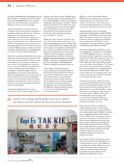
1 air-conditioning. ‘Kopi Es Tak Kie’ is written
across a signboard, followed by Chinese
letters. While Tak Kie does not serve food,
guests are welcome to order dishes from
other dining establishments along Gang
Gloria, such as babi kecap (pork with soy
sauce), bakut (pork ribs served in broth),
nasi campur (mixed rice), nasi tim (steamed
chicken rice), chicken noodles and rujak
juhi (fruit salad), as well as other
traditional Peranakan-influenced
Indonesian dishes.
For decades, Chinese settlers have made
their mark in Indonesia, especially in the
country’s culinary scene. Their influence
is nothing short of the result of a two-way
cultural exchange that has allowed the
Chinese to develop dishes from their
homeland using the richness of the
Indonesian archipelago’s spices.
In Jakarta, Martabak AA in Setiabudi is among wedang ronde, which, despite initially being Effendy, a second-generation Chinese-
the best places to sample a bite of martabak made using a Chinese recipe, still stands as Indonesian who manages the restaurant,
telur, while Martabak 65A in Pecenongan is one of the highlights of Dutch acculturation. whispered the secret to Restoran Trio’s
believed to be the best place to sample the Originally called tangyuan, the dish – balls of success: “To become a restaurant owner,
different varieties of sweet martabak. glutinous rice flour served with warm soup you need to understand the art of cooking.
– is typically served as part of the Dongzhi You cannot rely solely on the chef,” he said.
Another dish that has evolved to become Festival. The Dutch, however, found the
a staple in Indonesian Chinese restaurants is name difficult to pronounce and later Another popular Chinese Peranakan
fuyunghai, which is believed to be a Chinese decided to call it rondje after its shape restaurant is Cahaya Kota on Jalan Wahid
adaptation of the European omelette. (rond is Dutch for ‘round’). Hasymin, Central Jakarta, which opened in
Originally made with a mix of eggs, crab 1943. The restaurant is home to about 100
meat, onions and a few other ingredients, Indonesians then took the original recipe Cantonese dishes, ranging from Shanghai
today fuyunghai, which means ‘crab that sounds of ronde and added their own touch to the prawn spring rolls, fried chicken, duck
like hai’, no longer relies on crab meat as its dish, taking things up a notch by filling what with hoisin sauce, and Cantonese snapper,
main ingredient. Instead it is now served with were originally just balls of dough with nuts, to salted frog with Chinese mustard.
a variety of fillings, such as chicken or mixed brown sugar or kacang hitam. In their hands,
vegetables. Restoran Trio in Central Jakarta the soup, too, saw improvements, as they Meanwhile, Kedai Kopi Tak Kie, perched
is a must to seek out this delicious dish. began concocting their own version with in Gang Gloria, a small alley in the Glodok
a blend of sugar and ginger, creating the area of West Jakarta, stands as a testament
Aside from cooking unforgettable main course wedang ronde we are familiar with today. to Chinese settlers’ expertise in concocting
dishes, the Chinese are also known for their Ronde Mania Ibu Suhartini in Alun-Alun delicious beverages. First opened in 1927, this
innovative desserts. While the Dutch served Kidul is a favourite in Yogyakarta, while simple café serves just two types of drinks:
toetje (desserts), the Chinese created their for those travelling to Malang, Ronde black coffee and milk coffee, both of which
own version, something known today as es Titoni is a highly recommended pit stop. are served with ice in a tall glass. The Chinese
puter, an ice-cream-like dessert made from may be better known for their tea culture,
coconut milk and sugar. Its production Today, Chinese food is ubiquitous but it is precisely this sort of simplicity that
technique is relatively simple, made by across Indonesia. From street hawkers to has attracted coffee lovers to this small
spinning the ice container upon salted ice. the many restaurants that dot its vibrant corner of the city. “It’s all about taste,” says
What was initially just sweet cream produced cities, these establishments often come A Yauw, the grandson of Tak Kie’s founder,
from a mixture of coconut milk and sugar, with extensive menus and a handful who manages the place today.
es puter is now served at various Indonesian of stories (or, rather, myths). Restoran
festivities and celebrations with a variety of Trio in Jakarta is one of them; opening A Yauw says he prefers coffee beans from
flavours. It can also be found by the roadside, two years after Indonesia claimed its Lampung and Sidikalang for his beverages,
sold by street hawkers. independence, it serves approximately which are made using a family recipe that
300 different Chinese Peranakan dishes has been passed down from generation to
Gastronomic influence flows in every on its menu. Its Nanking chicken generation. For a cup of iced coffee, A Yauw
direction of course. Take the sugary dessert is a crowd favourite. insists on not pouring hot coffee over ice,
but rather opts to chill his coffee in the
morning before later serving it with
Aside from cooking unforgettable main course dishes, ice once it has cooled off. “When ice
melts because of the heat of the coffee,
the Chinese are also known for their innovative desserts. the flavour is ruined,” he says.
Kedai Kopi Tak Kie has a simple but
unique design. Its space is a throwback
to the city’s earlier days, small and without
1 air-conditioning. ‘Kopi Es Tak Kie’ is written
across a signboard, followed by Chinese
letters. While Tak Kie does not serve food,
guests are welcome to order dishes from
other dining establishments along Gang
Gloria, such as babi kecap (pork with soy
sauce), bakut (pork ribs served in broth),
nasi campur (mixed rice), nasi tim (steamed
chicken rice), chicken noodles and rujak
juhi (fruit salad), as well as other
traditional Peranakan-influenced
Indonesian dishes.
For decades, Chinese settlers have made
their mark in Indonesia, especially in the
country’s culinary scene. Their influence
is nothing short of the result of a two-way
cultural exchange that has allowed the
Chinese to develop dishes from their
homeland using the richness of the
Indonesian archipelago’s spices.